

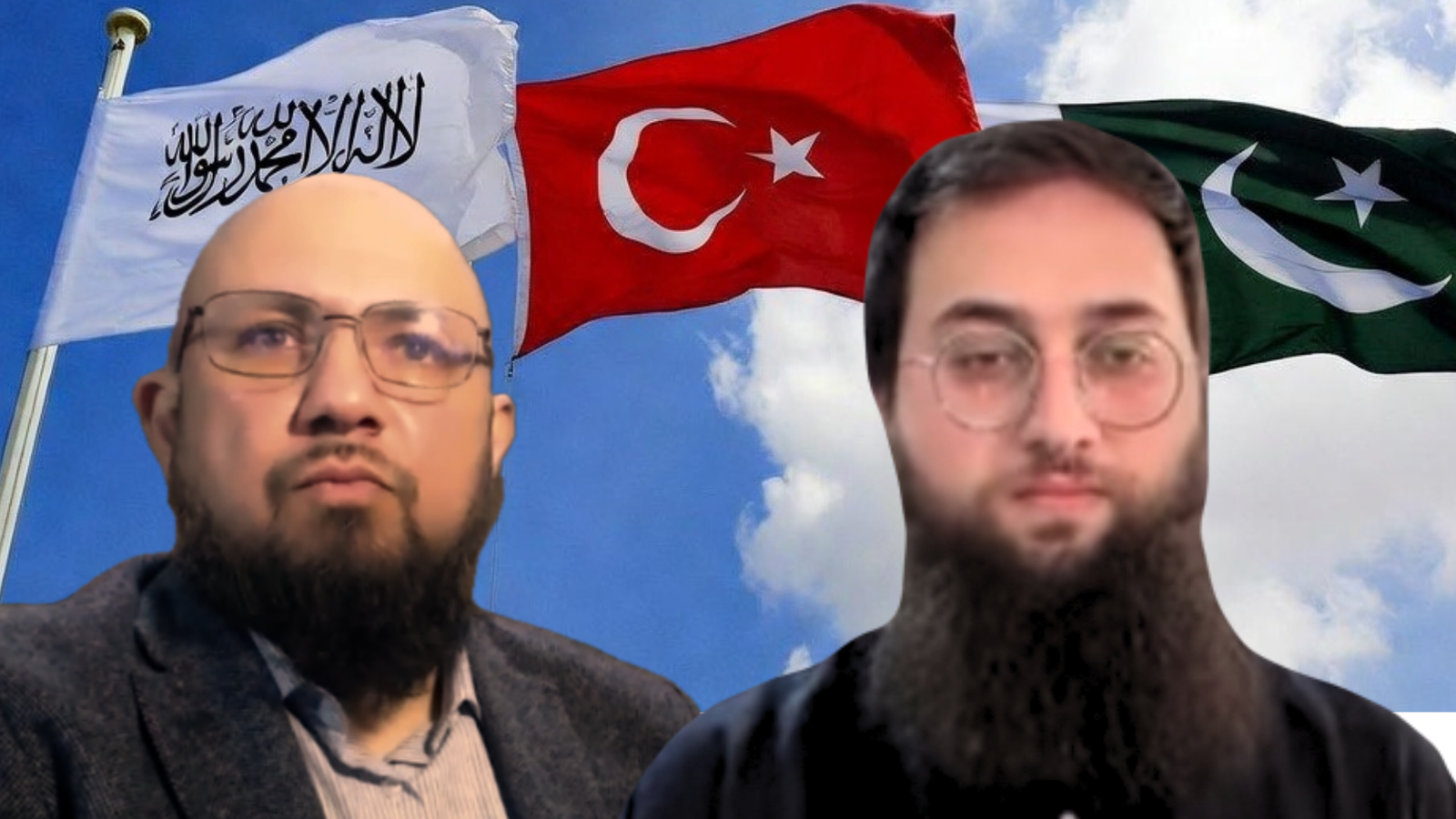
In this episode of the Afghan Eye Podcast, host Sangar Paykhar speaks to MEPA News Chief Editor Muhammed Enes about how Turkish foreign policy now understands Afghanistan, Pakistan and the shifting balance of power in the wider region. The conversation moves from media narratives and the recent flare-up along the Durand Line to Qatar–Turkiye mediation efforts and the limits of Ankara’s room for manoeuvre under Western pressure.
Turkish foreign policy between Afghanistan and Pakistan
The discussion opens with a simple question: how does Turkiye see Afghanistan and Pakistan after 2021? From the very start, Enes underlines that Turkish foreign policy has historically given much more attention to the Middle East, the Balkans and the Caucasus than to Afghanistan and Pakistan, which entered Ankara’s strategic radar later and more slowly.
He explains that Afghanistan nonetheless holds an older and more organic place in Turkish political imagination than Pakistan. From Ottoman and early republican times, Turkish thinkers and officials looked eastward to Central Asia and Afghanistan as part of a shared civilisational geography. Pakistan, by contrast, is a newer state whose ties with Turkey were shaped largely through post-Second World War alliances and Anglo-American influence.
Against this backdrop, the episode explores how Turkiye has approached Afghanistan since the return of the Islamic Emirate in 2021. Enes describes a cautious but active engagement. Turkey maintains diplomatic channels with Kabul, and has a visible presence through NGOs and business that, in his view, is “second only to China” in practical engagement with the Afghan authorities. At the same time, formal recognition is held back by NATO obligations, United States pressure and internal political divides in Ankara.
Media narratives and the Pakistan question in Turkey
One of the central themes of the episode is Pakistan’s image inside Turkiye. For decades, Pakistan has enjoyed a strong reputation among Turkish Islamically minded audiences as a pious, brave and loyal “Muslim state” that stands up for the Muslim Ummah. Pakistani support over issues such as Kashmir and Palestine has fed this romantic view.
According to Enes, this picture began to crack during the recent tensions and military incidents along the Durand Line between Afghanistan and Pakistan. When the crisis erupted, much of the Turkish media, particularly outlets close to the state, simply repeated Pakistani talking points and framed events in Islamabad’s favour. This reflected old habits in editorial rooms as well as personal connections between Pakistani institutions and certain Turkish journalists.
However, as reports and images emerged of Pakistani strikes killing civilians inside Afghanistan, Turkish public opinion was less willing to accept the familiar narrative. Enes notes that conservative and religiously-inclined Turks, who had long admired Pakistan, struggled to reconcile that admiration with scenes of Afghan civilians being targeted and with the Pakistani establishment’s simultaneous praise for the United States at a time when Gaza dominates the Muslim world’s conscience.
The podcast underlines that this dissonance has created a quiet but important reassessment. Pakistan is still seen as a significant state, but its establishment appears, in Enes’s telling, more unstable, more entangled with Western security structures and less reliable as a principled actor.
Qatar, Turkey and Saudi Arabia as regional mediators
Sangar Paykhar then presses Enes on the role of Turkiye in the diplomatic efforts to defuse Afghanistan–Pakistan tensions after the escalation. Here the episode offers a rare inside look at the choreography of regional mediation.
Enes describes how, after the crisis along the Durand Line, Qatar and Turkiye moved to host talks between delegations from Kabul and Islamabad. He notes that the Afghan side sent senior security and diplomatic officials to Istanbul, signalling that Kabul took the process seriously and also trusted Turkiye enough to engage at a high level.
Pakistan, by contrast, dispatched a relatively low-level and fragmented delegation. For Enes, this was read in Ankara as a sign of disrespect both to Turkiye and to the seriousness of the mediation itself. When the talks stalled, the process began to shift towards Saudi Arabia, which has its own historic channels with Pakistan and Afghanistan.
The episode uses this episode of shuttle mediation to illuminate Turkiye’s broader posture. Ankara wants to be seen as an honest broker capable of talking to all sides, from Doha to Riyadh and from Kabul to Islamabad. Yet its leverage is limited by others’ calculations, by Pakistan’s internal instability and by the perception that some Pakistani officials still assume their narratives will be accepted automatically.
Domestic debates in Turkiye over the Islamic Emirate
The conversation then turns inward, to the domestic Turkish debate about Afghanistan and the Islamic Emirate. Enes sketches a political landscape in which Afghanistan has become a quiet point of contention between different ideological camps.
On one side stand Islamic NGOs, conservative media and religious communities that visit Afghanistan frequently, deliver humanitarian aid and advocate closer engagement with the authorities in Kabul. For these circles, the Islamic Emirate represents both an Islamic government and a partner in regional stability; they argue that Turkiye should lead the way towards normalisation and, eventually, recognition.
On the other side are secular, liberal and some nationalist voices who want Turkiye to distance itself from Afghanistan and, more broadly, from the Middle East. These groups fear that close ties to Islamic movements will deepen tensions with Western partners and entangle Turkiye in new security and reputational risks.
Enes suggests that President Erdoğan and the ruling establishment try to balance these pressures. They maintain active engagement with Kabul, but stop short of formal recognition. They present their Afghanistan policy to Islamic constituencies as principled support for Muslims, while assuring Western partners that Turkey will not break ranks on recognition without broader consensus.
India, Pakistan and the wider regional order
A recurring undercurrent in the discussion is the place of India and Pakistan in Turkiye’s long-term strategic thinking. Although the episode focuses on Afghanistan and Pakistan, Enes repeatedly notes that India’s economic weight makes it a “natural partner” for most states, including Turkiye.
Whilst Turkiye and various Arab governments may express rhetorical sympathy for Pakistan in moments of crisis, very few are willing to sacrifice their relationships with India. This reality, he argues, limits Pakistan’s leverage. Chronic instability, repeated economic crises and a pattern of military and dynastic rule further undermine the country’s attractiveness as a deep strategic partner.
In contrast, Enes sees Afghanistan’s main asset as stability. If the authorities in Kabul can maintain internal security, avoid being drawn into great-power rivalries and offer reliable transit and mining opportunities, Ankara and other regional capitals will gradually treat Afghanistan as a predictable actor in a multipolar landscape.
